

Image

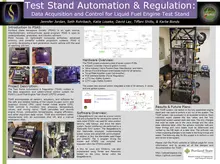
The Portland State Aerospace Society (PSAS) is developing a liquid fueled rocket engine. A major part of this development is the ability to test such an engine. A rocket engine test stand stores the oxidizer and fuel, as well as holding the rocket engine in place while it is activated. This allows for cold fire and hot fire testing of the rocket engine. Cold fire testing is to ensure fluids are flowing properly, and the cryogenic conditions do not compromise any of the parts. Hot fire testing is to ensure the rocket engine bell can withstand the extreme pressures and temperatures which occur when the rocket is fired. Hot fire testing is also performed to characterize the thrust of the engine by reviewing data collected while the engine is being fired. Due to safety concerns, the test stand needs to be fully automated during the actual hot fire test. The test stand automation regulation (TSAR) project met all of the control, monitoring, and safety needs for the test stand. TSAR consists of six primary modules: control station, the main processor, data acquisition, indicator and safety systems, the actuator controller (AC), and the power system. The TSAR system was fully integrated to the test stand, all hardware and software was tested and deemed successful,and the test stand underwent a dry run. The system is ready for cold and hot fire testing and is awaiting access to a safe location to perform the test.